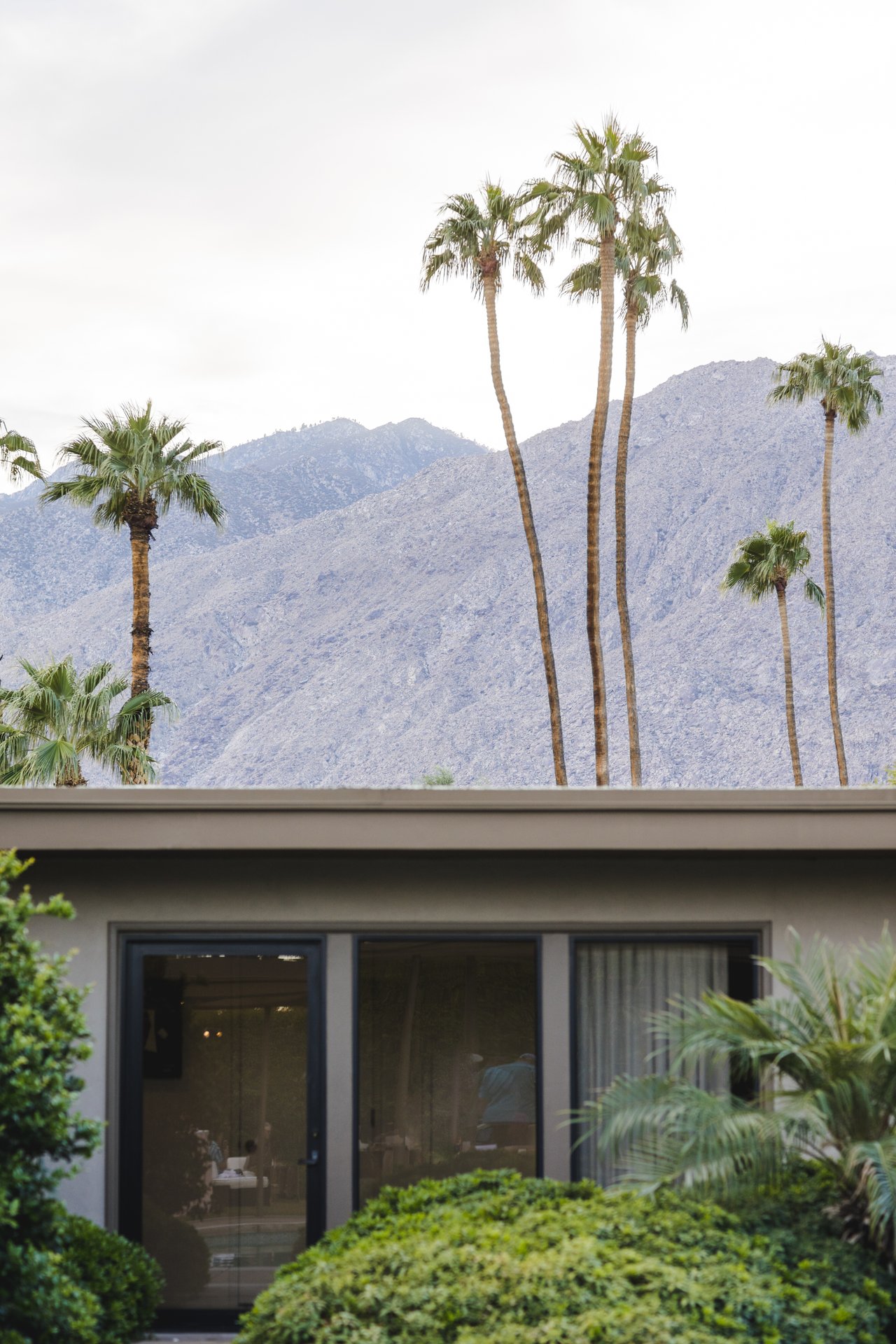
Every architecture enthusiast who visits Palm Springs eventually finds their way to a glass-and-steel box cantilevered into the hillside above the city — a structure where a desert boulder pushes through the living room wall as a natural divider. That's Frey House II, and it may be the most unapologetically bold residential design in California. It was the home and final statement of Albert Frey, and it tells you everything about how he approached the desert.
For buyers looking at architecturally significant properties in the Coachella Valley, understanding Frey's legacy isn't just a history lesson — it's market intelligence. Authentic Frey commissions are rare, they carry historic designation opportunities, and they attract a buyer pool motivated by architecture itself. Here's what you need to know.
Who Was Albert Frey?
Born in Zurich, Switzerland in 1903, Albert Frey trained in architecture before moving to Paris in 1928, where he joined Le Corbusier's studio and contributed to early work on the iconic Villa Savoye. He arrived in Palm Springs in 1934, originally for a health stay, and never left. He died there in 1998 at age 95, having spent six decades shaping what desert architecture could be.
What set Frey apart was his conviction that buildings should respond to the desert rather than resist it. Deep overhangs for shade. Natural cross-ventilation to reduce cooling loads. Lightweight steel and glass that appeared to float over terrain. Indigenous boulders and native vegetation incorporated directly into structures rather than cleared away. In an era before universal air conditioning, this was pragmatic brilliance. Today, it reads as extraordinary design.
Frey's Design Principles — and Why They Hold Up
Walk through a Frey-designed home and the light is different. It's softer and more directional — controlled by overhangs and clerestory windows rather than overhead fixtures. The boundary between inside and outside dissolves. The Santa Rosa Mountains are not a view; they're part of the living room.
These weren't stylistic preferences. They were climate-responsive strategies that remain practical today. Homes designed around natural shading and ventilation run cooler in summer, brighter in winter, and generally work with the environment rather than against it. For buyers thinking seriously about long-term ownership costs in the desert, this distinction matters.
Albert Frey's Most Significant Structures in Palm Springs
Most of Frey's landmark work is civic or semi-public — which is part of why authenticated private commissions are so rare and valuable.
Frey House II (1964) is his most celebrated work. Measuring 800 square feet and cantilevered over a hillside at the edge of the Palm Springs Art Museum campus, it incorporates a massive boulder as a natural room divider between the bedroom and living space. It is now part of the museum and available for tours — check psmuseum.org for current hours.
The Tramway Gas Station (1965) — now serving as the Palm Springs Visitor Center on North Palm Canyon Drive — is one of the most photographed structures in the city. Its sweeping hyperbolic paraboloid roof is unmistakably Frey.
Palm Springs City Hall (1952–57), designed with the firm Frey, Clark & Chambers, remains a civic anchor of the downtown core.
And then there are the Bel Vista tract homes — 15 modest single-family homes Frey designed in 1945 with partner John Porter Clark as an experiment in affordable modernist housing in the Movie Colony East neighborhood. This was Palm Springs' first subdivision to feature modern-style houses. Three have been restored and now carry historic designation. When they come to market, recent asking prices have ranged from approximately $965K to $1.2M — placing them among the most accessible entry points to owning an authenticated Frey residential design.
What Frey-Attributed Properties Mean for Buyers Today
Authentic Frey-designed private residences are among the rarest commodities in the Palm Springs market. When they do appear, they attract buyers motivated by architectural significance — a different kind of demand than location or finishes alone. That distinction shapes pricing, time on market, and negotiation dynamics.
A few practical considerations worth knowing:
Historic designation opens the Mills Act. Properties eligible for Palm Springs' Class 1 Historic designation can enter a Mills Act agreement with the city, which provides substantial property tax reduction in exchange for a commitment to maintain the home's historic character. Palm Springs is notably non-restrictive in its requirements — no specific restoration mandates, just basic maintenance. For buyers who would preserve the architecture anyway, the tax benefit is material.
Renovation requires thoughtfulness. Replacing original clerestory windows with drywall, swapping steel frames for wood, or adding an incompatible room addition can erode both historic eligibility and the premium buyer appeal that architecture-focused buyers pay for. If you're purchasing a Frey-era property with any investment consideration, preservation is the financially sound path.
Verify attribution carefully. "Frey-inspired" and "Frey-designed" are not the same thing in Palm Springs real estate marketing, and the distinction carries a real price premium. Ask for original plans, building permits, or documentation from the Palm Springs Preservation Foundation (pspreservation.org) or the Palm Springs Modern Committee (psmodcom.org).
For a broader look at Palm Springs' mid-century design heritage, see our guide to William Krisel's Palm Springs homes — Krisel's work and Frey's represent two distinct strands of the same movement.
All attribution data sourced from the Palm Springs Preservation Foundation (pspreservation.org) and Palm Springs Modern Committee (psmodcom.org). Bel Vista price range from recent MLS listing records (Dwell, May 2026). Market data subject to change — verify directly with the association or your agent before making purchasing decisions.
Frequently Asked Questions: Albert Frey and Palm Springs Architecture
Is Frey House II open to the public?
Yes. Frey House II is part of the Palm Springs Art Museum and available for tours. It sits on the hillside above the main museum campus on Museum Drive. Check psmuseum.org for current tour schedules.
Are Albert Frey–designed homes currently for sale in Palm Springs?
Authenticated private Frey commissions are rare. The Bel Vista tract homes in Movie Colony East represent the most accessible category, with recent asking prices in the $965K–$1.2M range. When Frey-attributed properties surface, they move quickly. Working with an agent who monitors this segment closely is essential.
What is desert modernism?
Desert modernism is an architectural movement centered in Palm Springs from roughly the 1940s through the 1970s. It applied European modernist principles — open plans, flat or low-slope rooflines, extensive glazing — to the specific challenges of desert living, prioritizing shade, natural ventilation, and indoor-outdoor connectivity.
Does historic designation restrict what I can do with a Palm Springs home?
Palm Springs' Class 1 designation is notably flexible by California standards. Owners must maintain the property and avoid alterations that compromise character-defining features without city approval. The city doesn't require proactive restoration projects. For buyers who plan to preserve the architecture anyway, the Mills Act tax benefit can be substantial.
How do I verify that a home was designed by Albert Frey?
The most reliable sources are the Palm Springs Preservation Foundation (pspreservation.org), the Palm Springs Modern Committee (psmodcom.org), and the City of Palm Springs' historic properties database. Original architectural drawings and period building permits are the strongest documentation.
See Current Mid-Century Modern Listings — Curated
If you're looking for architecturally significant mid-century modern homes in the Coachella Valley, I maintain a curated list of properties worth knowing about. Email me at [email protected] and I'll add you to the list — updated as new inventory surfaces, sent only to buyers who've asked for it.
Written by Norman Williams, Coachella Valley real estate professional with 30 years in the market. Norman specializes in architecturally significant and mid-century modern properties in Palm Springs, Indian Wells, Rancho Mirage, and La Quinta.