Palm Springs mid-century neighborhoods reward buyers who care about post-and-beam structure, glass, and indoor-outdoor living as much as zip code. Vista Las Palmas, Twin Palms, and Racquet Club Estates sit among the city's most searched design pockets. Each offers a different mix of lot size, downtown access, and restoration culture.
Takeaway: choose the street pattern and architectural integrity first, then underwrite roof, HVAC, pool, and permit history. Design premiums are real for thoughtful restorations; unfinished projects need a clear budget.
Why is Palm Springs a mid-century hub?
From the 1930s through the 1960s, architects and builders refined desert-modern living here: low roofs, wide overhangs, clerestory light, and pool courtyards that read as outdoor rooms. That legacy still shapes Modernism Week programming, preservation culture, and demand for restored homes by names collectors recognize, including work associated with Donald Wexler, Albert Frey, William Krisel, and E. Stewart Williams across the broader city.
If you value architecture as a primary purchase driver, these neighborhoods offer both stewardship-minded streets and projects that still need careful work.
What should buyers know about Vista Las Palmas?
Vista Las Palmas sits in central Palm Springs with quick access to downtown restaurants, galleries, and shops while keeping a residential pace. Expect mature palms, leafy streets, and a high share of restored or carefully maintained single-level homes. Post-and-beam frames, wide glass, and L-plan layouts that open to pools are common.
Market signal without inventing a median: this pocket sits toward the higher end for Palm Springs single-family design inventory. Restored properties and homes with documented architectural or cultural histories often command premiums. Smaller or less-restored homes can still price above generic city averages when the bones are strong.
How does Twin Palms compare?
Twin Palms lies southwest of downtown in the broader Las Palmas area. Streets feel intimate and walkable, with a dense mid-century character that attracts preservationists and design-minded buyers. Lots are often smaller than in Vista Las Palmas, but tract and custom homes can be equally compelling: flat roofs, clerestory bands, and open plans that photograph cleanly.
Condition drives outcomes. Thoughtful restorations tend to draw strong interest. Homes needing systems and envelope work attract buyers who already budget for specialized contractors.
What is the Racquet Club Estates profile?
Racquet Club Estates sits near Ramon Road and Indian Canyon Drive, a short drive to downtown, with roots in Palm Springs' mid-century tennis and club culture. Many blocks feel more suburban, with mature landscaping and, in places, larger lots and private outdoor rooms.
Architecture ranges from mid-century ranch to later updates. Buyers who want more outdoor spread while staying close to the core often shortlist this neighborhood. Pricing tracks lot size, restoration quality, and how much original vocabulary remains.
How do the three neighborhoods compare at a glance?
- Vista Las Palmas: Central, many custom or architect-forward homes, larger lots common, stronger restoration premiums.
- Twin Palms: Intimate design streets, iconic tract and custom stock, smaller lots, preservation-minded demand.
- Racquet Club Estates: Suburban feel, some larger lots, mix of ranch and modern, wider condition and price spread.
What defines a mid-century home here?
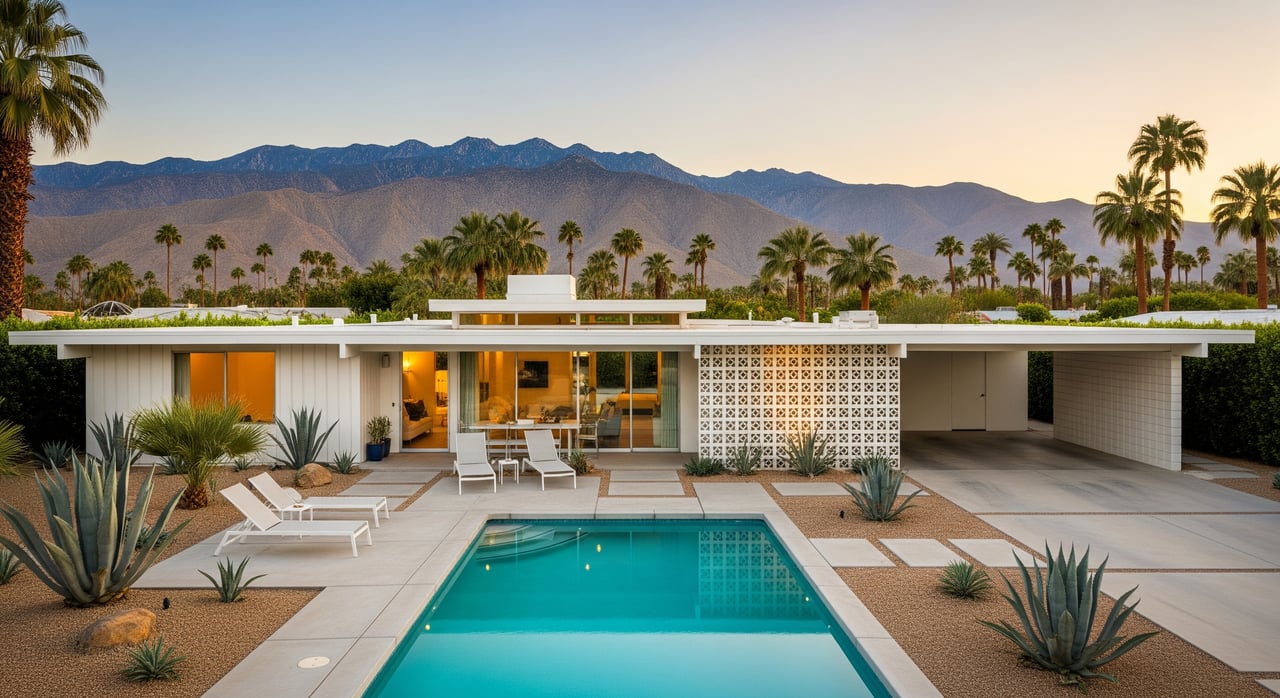
- Low or flat roofs with wide overhangs
- Clerestory windows and floor-to-ceiling glass
- Sliding walls to pool patios
- Exposed post-and-beam structure
- Breeze-block and screening walls
- Terrazzo or concrete floors, built-ins, minimal trim
The best renovations protect those tells while updating comfort and efficiency. Strip-outs that erase the period vocabulary usually underperform with design buyers.
How should you buy or sell in these neighborhoods?
Buyers: Verify provenance and permits. Hire inspectors who understand flat roofs, older mechanicals, and pool systems. Budget for HVAC, roof, pool equipment, electrical or plumbing, and glass. Work with lenders and appraisers who have closed designer or historic desert homes.
Sellers: Document architectural attribution when you have it. Stage for light and axis views. Price to recent closed sales on comparable streets, not to a wishful remodel cost recovery. For broader market tone, see Is the Coachella Valley market changing? and the Spring 2026 seller strategy guide.
Browse Palm Springs homes for sale when you are ready to tour. Golf-oriented buyers comparing lifestyle elsewhere can also read the 2026 golf communities guide.
Frequently asked questions about Palm Springs mid-century neighborhoods
Which neighborhood is best for a first mid-century purchase?
Twin Palms often suits buyers who want dense design character and walkable blocks. Vista Las Palmas suits those prioritizing larger lots and central access. Racquet Club Estates suits buyers who want more outdoor spread.
Do restored homes always cost more?
Usually, when the restoration protects original vocabulary and upgrades systems cleanly. Poor flips that erase period detail can disappoint both price and buyer interest.
Should I worry about flat roofs and pools?
Plan for specialized inspection and reserves. Flat roofs and pools are central to the lifestyle and to carrying costs. They are manageable with the right team, not reasons to avoid the typology.
Is Modernism Week relevant to buying?
Yes as culture and demand context. Touring during peak events can help you feel the architecture community, but purchase decisions still turn on inspections, permits, and comps.
Who can help compare streets and restorations?
Norman Williams and Jacqulyn Stanton of The Stanton Williams Group at Compass work design-minded buyers and sellers across Palm Springs mid-century pockets. Reach Norman at 760.464.2190 (DRE #02051057) or Jacqulyn at 760.702.2557 (DRE #01369783).
Norman Williams and Jacqulyn Stanton of The Stanton Williams Group at Compass help clients match mid-century neighborhoods to budget, restoration appetite, and daily logistics. Call Norman at 760.464.2190 (DRE #02051057) or Jacqulyn at 760.702.2557 (DRE #01369783).
Schema note: BlogPosting with author Norman Williams; FAQPage for the five questions above. No invented sale-price medians. Architectural neighborhood descriptions are general and not a valuation of any property.