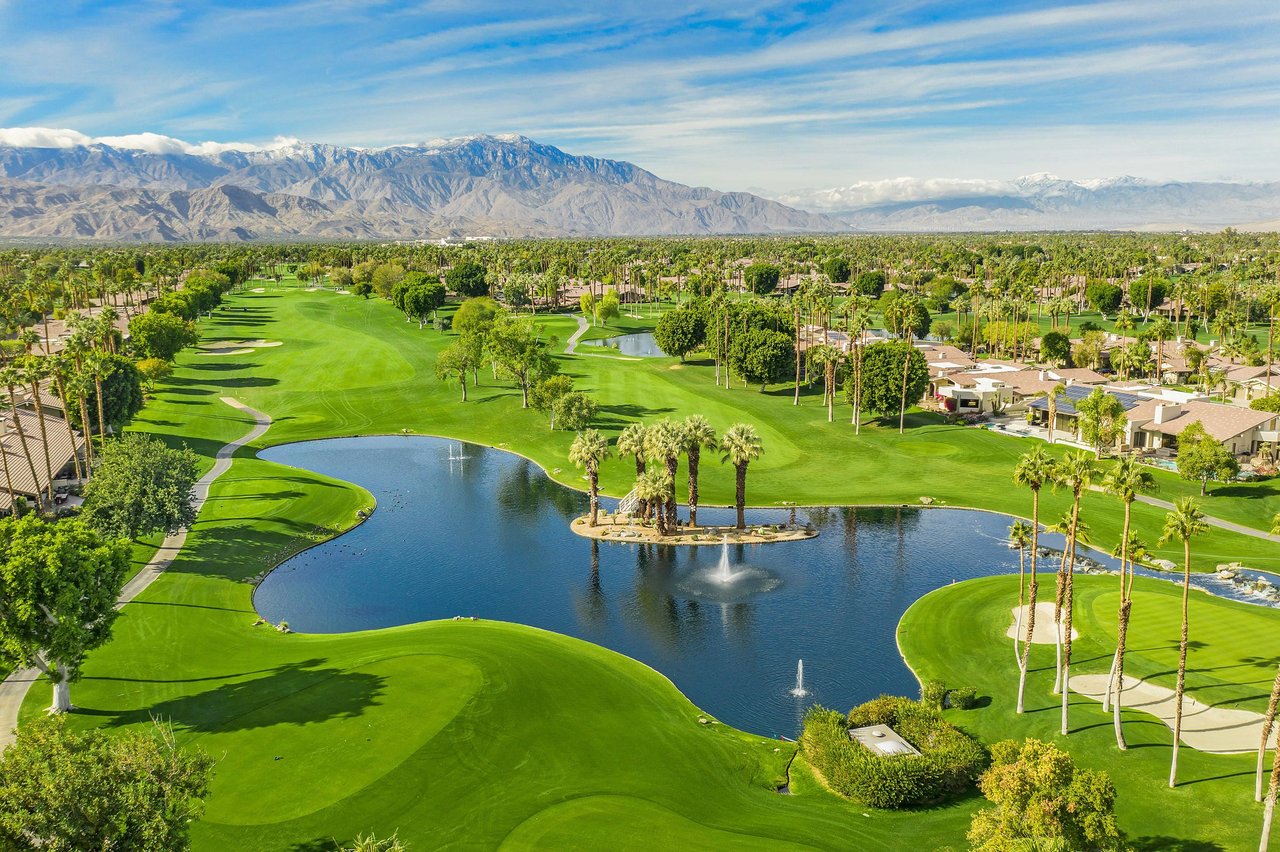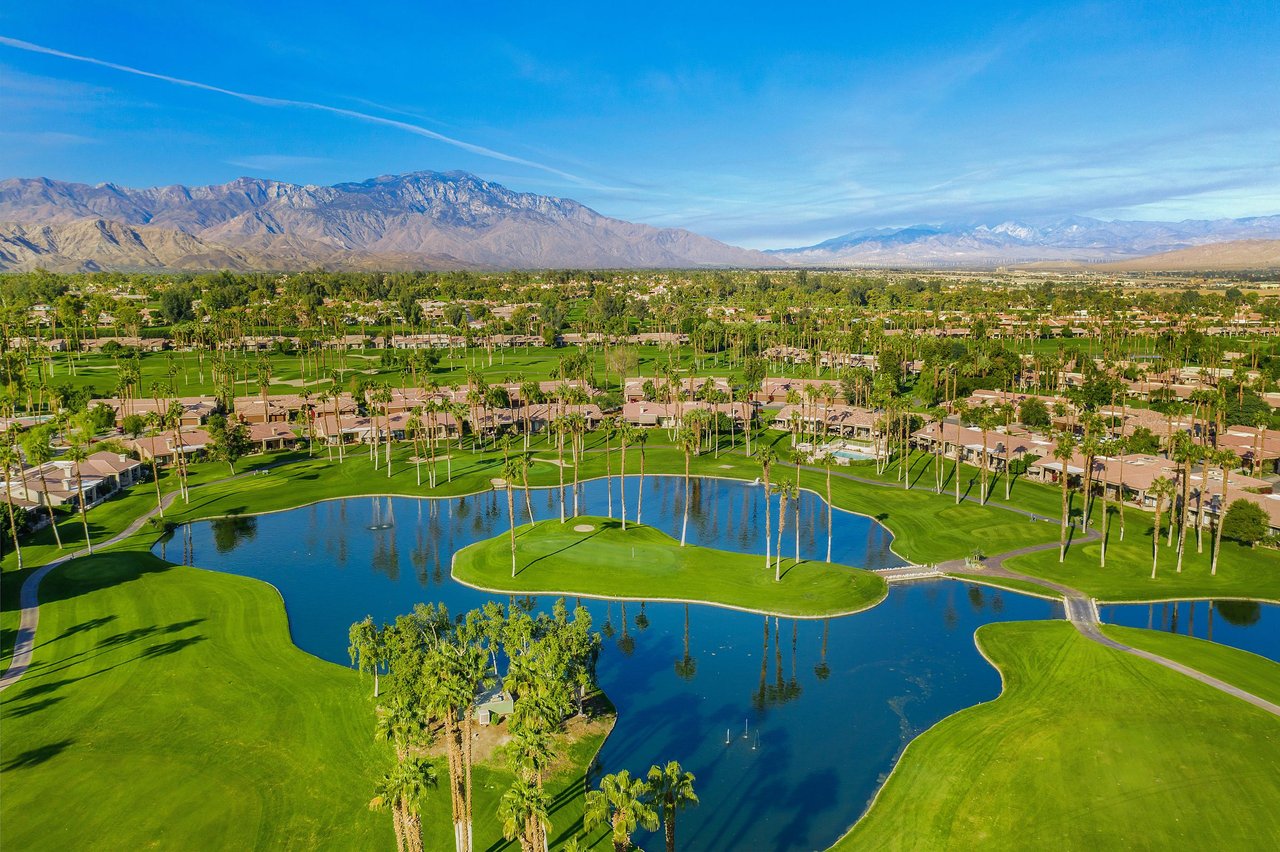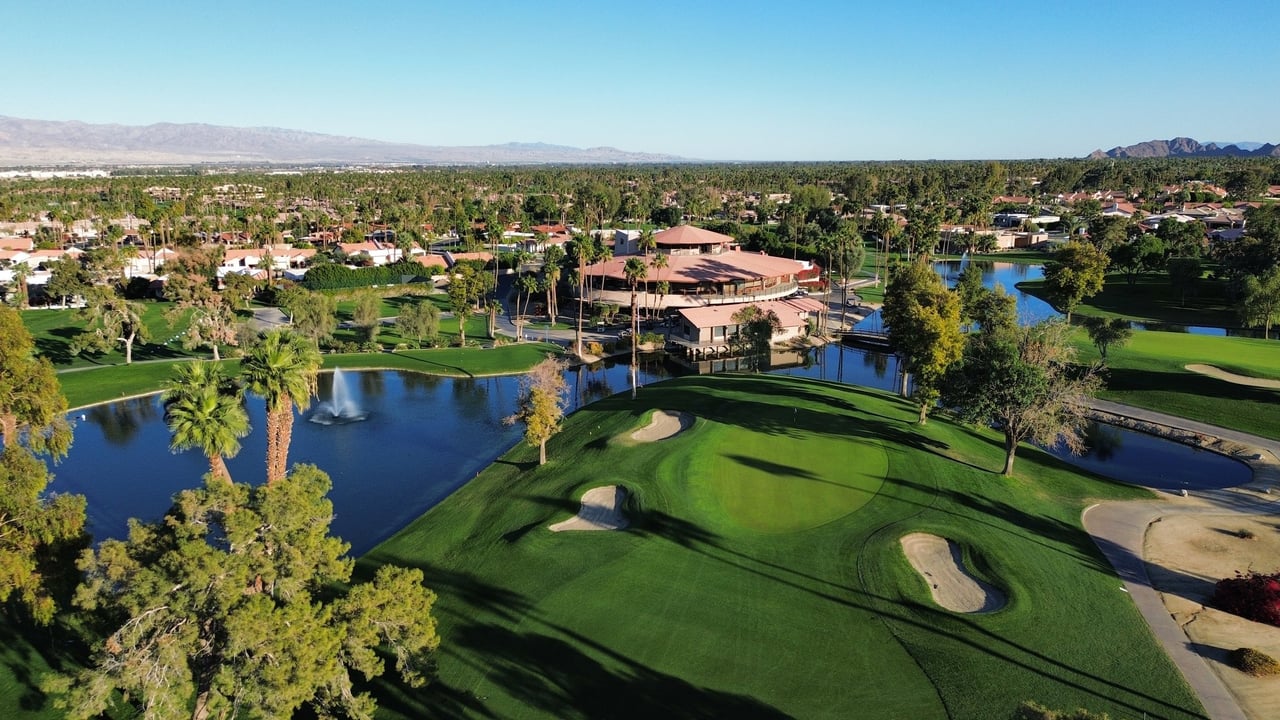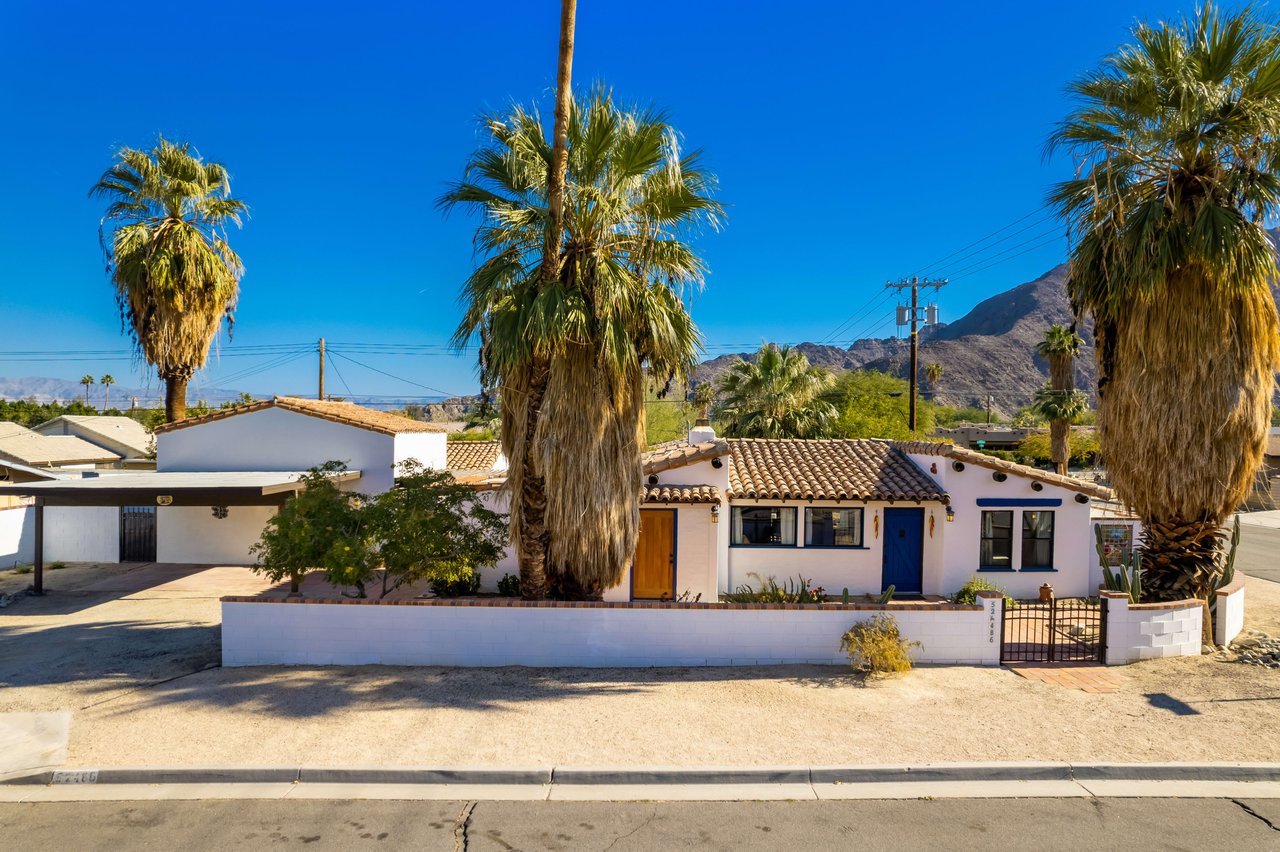
La Quinta's famous casitas are not generic farm cottages. They are the adobe guest houses that opened with the La Quinta Hotel on December 29, 1926, under the Santa Rosa Mountains at what is now La Quinta Resort & Club (49-499 Eisenhower Drive). Founder Walter H. Morgan hired Pasadena architect Gordon Kaufmann for a Spanish-style retreat of courtyards and freestanding cottages rather than a single grand hotel block.
When buyers ask me what "La Quinta casitas" really means, they are usually mixing three ideas: the 1926 Gordon Kaufmann adobe cottages at La Quinta Resort & Club, Spanish Colonial homes that echo that language, and a detached guest suite on a private lot. Presentation starts with naming the thing correctly. Here is the architecture history, then how I help buyers and sellers use the word without confusion.
That first season set the vocabulary still associated with the city: white adobe walls, red clay tile roofs, blue shutters, citrus, and quiet. When buyers, guests, and locals say "the casitas," they usually mean this resort lineage. For how the wider city lives around that history, see our Living in La Quinta 2026 neighborhood guide and current La Quinta homes for sale.
Who built La Quinta's original casitas, and when?
Walter H. Morgan, a San Francisco businessman with ties to the Morgan Oyster Company, assembled land in the Coachella Valley in the early 1920s. Resort records place the opening of La Quinta Hotel on 29 December 1926 across about 1,400 acres, with 20 guest casitas, an open-air glassed dining room, and three courtyards. Morgan also introduced an early nine-hole golf course on the grounds that first year.
The name "La Quinta" is often linked to the Spanish idea of a country villa or place of rest, and to Mexican quintas: a main house ringed by smaller casitas. Palm Springs Life's 2026 centennial history notes Morgan's interest in date cultivation near Point Happy Ranch and the clay-rich runoff from the Santa Rosas that made on-site adobe practical.
What does Gordon Kaufmann's casita architecture look like?
Kaufmann designed the original cottages in a Spanish Colonial Revival / Spanish-style adobe vocabulary: low horizontal massing, thick walls, red terracotta roofs, and pathways that stitch casitas to courtyards. La Quinta Resort's own centennial materials state that more than 165,000 handmade adobe bricks and tiles were crafted on the property for the first buildings. Palm Springs Life adds that kiln work for those materials took place on land that later became part of PGA WEST's Mountain Course.
Design details that still read from the walkways include hand-set roof tiles with a soft undulating ridge line and blue shutters against white adobe. Each of the first 20 casitas was named for a saint (resort history tour notes say alphabetical order). Documented names include San Ysidro, San Hilario, San Emilio, and San Anselmo. Furniture and light fixtures for the early rooms were part of Kaufmann's design brief, not an afterthought.
If you like Spanish Colonial massing in a residential golf setting rather than a hotel key, compare Andalusia's language in our Andalusia Country Club La Quinta buyers guide and the Andalusia developments page.
Why did Hollywood and Frank Capra care about these casitas?
Resort and Palm Springs Life histories place Greta Garbo, Clark Gable, Shirley Temple, Bette Davis, and other early Hollywood figures among the first guests who wanted privacy south of Palm Springs. Frank Capra returned often; Palm Springs Life reports he favored casita San Anselmo and worked on scripts there, including work connected to It Happened One Night. The resort later named a banquet room for Capra.
That privacy story is part of why the architecture still sells a mood: freestanding casitas, not a corridor hotel, under a mountain amphitheater. Guests arrived by car in the 1920s; after World War II, a private airstrip on the old golf-course side shortened the trip for returning stars. We do not invent guest lists beyond what resort and published histories document.
How did the resort casitas shape the City of La Quinta?
The hotel came first. The City of La Quinta incorporated in 1982 and took its name from the resort, a rare case of a California city named for a hotel property. In 1993 the property's name shifted from La Quinta Hotel Golf & Tennis Club to La Quinta Resort & Club. Golf expansion under Landmark Land and Pete Dye produced the Mountain and Dunes courses; PGA WEST grew on adjoining land. For ownership and HOA context next door, see Buying at PGA West, our PGA West HOA comparison, and the PGA West developments page.
Palm Springs Life's February 2026 centennial feature reports the resort today at about 620 casitas and 98 private villas. Treat that as a published snapshot, not a sales inventory. Room counts, villa programs, and spa facilities change; confirm current offerings with the resort.
Are La Quinta "casitas" the same as a casita on a private home?
No. On MLS and in residential marketing, a "casita" often means a detached guest suite, pool house, or ADU on a private lot. Examples show up in La Quinta Cove and other neighborhoods, including listing spotlights such as our note on 52883 Eisenhower Drive. That residential use of the word borrows the Spanish diminutive, but it is not the 1926 Kaufmann hotel product.
When you search "La Quinta casitas," separate three ideas: (1) guest rooms at La Quinta Resort & Club, (2) Spanish Colonial / adobe-inspired private homes in La Quinta, and (3) detached casita structures on individual lots. Old Town's plazas and seasonal calendar sit a short drive from the resort; see Fall in Old Town La Quinta 2026 and things to do while visiting La Quinta.
What should architecture-minded buyers take from the casita story?
Buyers who respond to the resort's adobe-and-tile language often look for thick walls, courtyard privacy, mountain backdrop, and Spanish Colonial detail in fee-simple homes. That taste can point toward La Quinta Country Club, Andalusia, parts of The Hideaway, and cove or foothill lots with Santa Rosa views. It is a design brief, not a price forecast. We do not invent medians, HOA dues, or resort room rates here.
Compare city fit in our La Quinta vs Indian Wells vs Palm Desert vs Rancho Mirage guide, and scan community pages such as La Quinta Country Club and The Hideaway when you are ready to match architecture to a specific association.
Frequently asked questions about La Quinta's famous casitas
When did La Quinta Resort's original casitas open?
La Quinta Hotel opened on December 29, 1926, with 20 guest casitas designed by Gordon Kaufmann for Walter H. Morgan, per the resort's published history.
Who was the architect of the original La Quinta casitas?
Pasadena architect Gordon Kaufmann. Resort materials describe Spanish-style adobe casitas with on-site handmade bricks and tiles; more than 165,000 pieces are cited for the early construction.
Why are the original casitas named after saints?
Each of the first 20 casitas was named for a saint. Documented examples include San Ysidro, San Hilario, San Emilio, and San Anselmo. Resort history notes describe alphabetical naming.
Is the City of La Quinta named after the resort?
Yes. The city incorporated in 1982 and took its name from the hotel and resort that preceded it.
Does buying a La Quinta home include a resort casita stay?
No. A private home purchase and a resort guest stay are separate. Club, spa, and golf access follow resort or membership rules, not the deed to a nearby house.
Norman Williams and Jacqulyn Stanton of The Stanton Williams Group at Compass help buyers who want Spanish Colonial and adobe-inspired homes near La Quinta Resort, PGA WEST, Andalusia, and Old Town. Reach Norman at 760.464.2190 (DRE #02051057) or Jacqulyn at 760.702.2557 (DRE #01369783).
Schema note: BlogPosting with author Norman Williams; FAQPage for the five questions above. Resort history facts attributed to La Quinta Resort & Club published history (Our Story; Centennial "Where It All Began") and Palm Springs Life (Feb 27, 2026 centennial feature). Room and villa counts are published snapshots and may change. Nothing here is a valuation of any property.